PC gaming trends 2026 will reshape how players build, play, and experience their favorite titles. The industry stands at a crossroads. New hardware launches promise unprecedented power. AI tools change game development and gameplay. Cloud platforms expand their reach. And player preferences continue to shift in surprising directions.
This article breaks down the major PC gaming trends 2026 will bring. From next-gen GPUs to AI-driven NPCs, streaming innovations to genre shifts, here’s what gamers and industry watchers should prepare for in the coming year.
Key Takeaways
- PC gaming trends 2026 will be driven by next-gen GPUs from NVIDIA, AMD, and Intel, delivering major performance gains and better power efficiency.
- AI integration transforms gameplay with smarter NPCs, improved frame generation, and AI-powered upscaling that reduces storage requirements.
- Cloud gaming matures in 2026 as latency drops below 20ms near data centers, though data caps and ownership concerns remain challenges.
- Extraction shooters and Soulslike mechanics continue to rise, while cozy games and complete single-player experiences gain renewed investment.
- DDR5 memory and PCIe 5.0 SSDs become mainstream, nearly eliminating load times for optimized titles.
- Cross-platform play becomes standard as publishers prioritize unified player bases over platform exclusivity.
Next-Generation Hardware and Performance
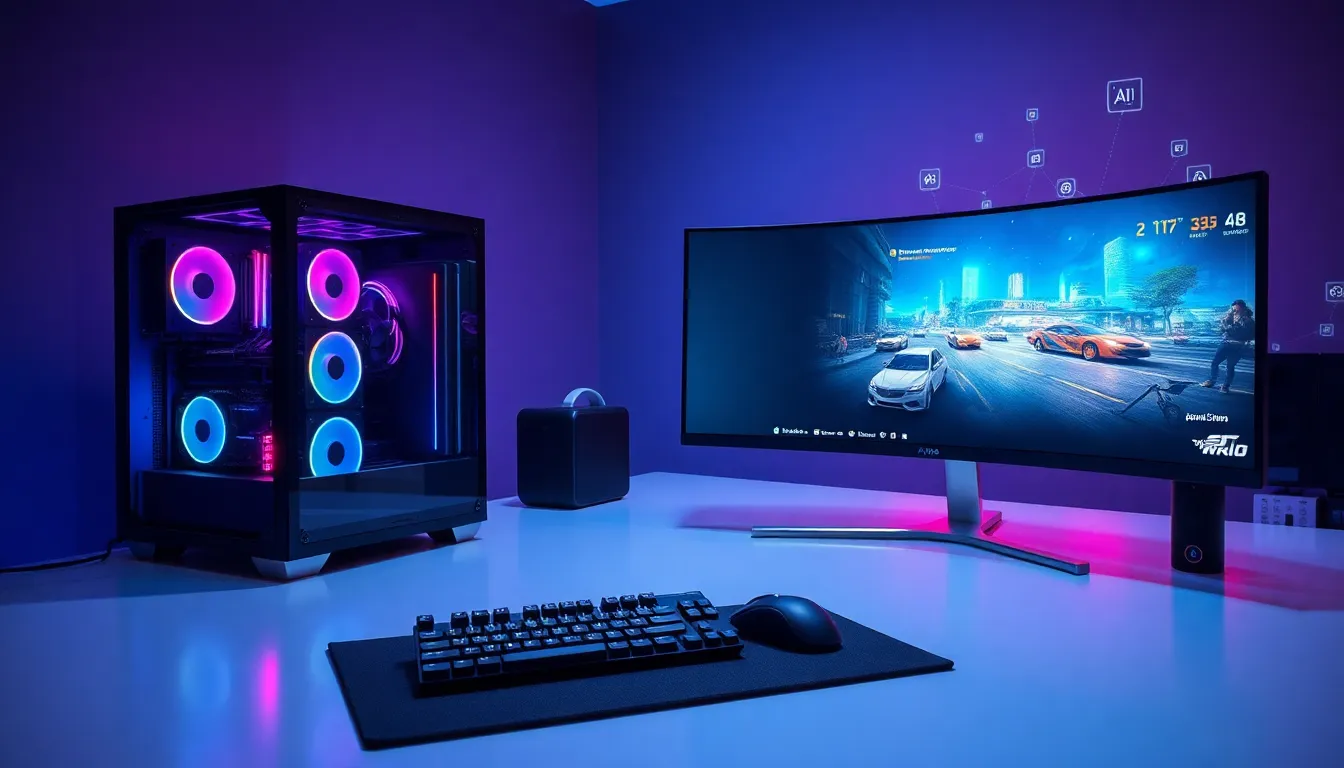
The PC gaming trends 2026 hardware landscape looks exciting. Both NVIDIA and AMD are expected to release their next-generation GPU architectures, promising significant performance gains over current models.
NVIDIA’s rumored Blackwell-successor chips may deliver 30-40% better ray tracing performance. AMD’s RDNA 4 refresh should close the gap in AI-accelerated features. Intel continues pushing its Arc lineup, targeting the mid-range market with competitive pricing.
DDR5 memory becomes standard in 2026. Prices have dropped enough that 32GB kits make sense for most gaming builds. PCIe 5.0 SSDs also hit mainstream adoption, offering read speeds exceeding 12,000 MB/s. Load times? Nearly gone for optimized titles.
Monitor technology keeps pace. OLED panels drop in price while QD-OLED variants push brightness limits. 4K at 240Hz becomes achievable for high-end systems. Many manufacturers now include DisplayPort 2.1, enabling single-cable 8K gaming at 60Hz.
The PC gaming trends 2026 hardware cycle favors builders. Competition between manufacturers drives innovation. Gamers benefit from more performance per dollar than any previous generation offered.
Power efficiency matters more now. New GPU architectures draw less wattage for equivalent performance. This shift makes compact builds and quieter cooling solutions practical for serious gaming rigs.
The Rise of AI-Powered Gaming Experiences
AI integration defines many PC gaming trends 2026 will showcase. Game developers use machine learning tools across production pipelines. Players interact with smarter systems than ever before.
NPC behavior gets a major upgrade. Studios carry out large language models to create dynamic conversations. Characters remember past interactions. They respond to player actions with contextual awareness. The scripted dialogue trees of old feel increasingly outdated.
Frame generation technology matures. NVIDIA’s DLSS and AMD’s FSR now produce frames that rival native rendering quality. Input latency issues from earlier versions are mostly solved. These tools let mid-range hardware punch above its weight class.
AI upscaling extends to texture work. Games can stream lower-resolution assets and reconstruct detail on the fly. Storage requirements shrink. Download sizes become more manageable.
Procedural content generation sees wider adoption. Developers use AI to create terrain, quest variations, and environmental details. This approach extends game replayability without proportional development costs.
The PC gaming trends 2026 AI revolution has critics too. Some players prefer handcrafted experiences. Concerns about AI-generated voice acting replacing human performers persist. The industry balances efficiency gains against artistic authenticity.
Anti-cheat systems employ AI detection methods. Machine learning identifies suspicious patterns faster than traditional rule-based approaches. Competitive gaming benefits from cleaner matches.
Cloud Gaming and Streaming Advancements
Cloud gaming earns its spot among the top PC gaming trends 2026 brings forward. Infrastructure improvements make streaming viable for more players worldwide.
NVIDIA GeForce NOW, Xbox Cloud Gaming, and Amazon Luna expand server coverage. Latency drops below 20ms for users near data centers. That number approaches local hardware responsiveness for many game types.
5G networks help mobile cloud gaming. Players access PC-quality titles on tablets and phones with minimal setup. The traditional boundary between PC and mobile gaming blurs.
Hybrid models gain traction. Some services let users combine local hardware with cloud processing. A modest GPU handles basic rendering while servers manage ray tracing and physics. This approach extends the useful life of aging gaming PCs.
PC gaming trends 2026 cloud adoption faces obstacles. Data caps frustrate heavy users. Rural areas lack necessary infrastructure. Subscription fatigue hits consumers juggling multiple gaming services.
Game ownership questions remain unresolved. Players cannot keep games when services shut down. This reality pushes some consumers back toward traditional purchases and local hardware.
Developers optimize titles for streaming from day one. Reduced input complexity and adjusted visual effects accommodate variable connection quality. Cloud-first game design becomes a recognized specialty.
Evolving Game Genres and Player Preferences
Player behavior shapes PC gaming trends 2026 as much as technology does. Genre preferences shift. New hybrid categories emerge. Established franchises adapt or fade.
Extraction shooters maintain momentum. The risk-reward loop of games like Escape from Tarkov inspires numerous competitors. Players enjoy the tension of losing progress combined with the thrill of successful runs.
Soulslike mechanics spread beyond action RPGs. Strategy games, platformers, and even racing titles incorporate deliberate difficulty and pattern-based challenges. Difficulty becomes a selling point rather than an obstacle.
Cozy games hold steady as a counterbalance. Farming simulators, life sims, and creative sandboxes offer low-stress alternatives. This segment attracts players seeking relaxation over competition.
Live-service games face scrutiny. Several high-profile failures in 2024-2025 made publishers cautious. Complete single-player experiences see renewed investment. Players demonstrate willingness to pay premium prices for finished products.
PC gaming trends 2026 show cross-platform play becoming standard. Publishers recognize that player bases fragment without it. Technical and business barriers gradually fall.
Retro aesthetics remain popular. Pixel art, PS1-era 3D graphics, and synthesizer soundtracks appeal to nostalgia and budget-conscious developers alike. Style matters more than polygon counts for many successful indie titles.
VR adoption grows slowly but steadily. Standalone headsets with PC streaming capabilities lower entry barriers. Killer apps remain scarce, though established franchises expand into virtual reality.