A solid PC gaming guide can save beginners hundreds of dollars and countless hours of frustration. The world of desktop gaming offers unmatched performance, customization, and game libraries, but getting started requires some assignments. This guide covers the essential hardware, the build-versus-buy decision, must-have peripherals, and optimization tips every new PC gamer needs. Whether someone wants to play competitive shooters at 240 frames per second or explore open-world adventures in stunning detail, this article breaks down everything they need to know.
Key Takeaways
- A balanced PC gaming guide emphasizes matching your GPU and CPU to avoid performance bottlenecks that waste hardware potential.
- For most gamers, 16GB of DDR5 RAM and a 1TB NVMe SSD provide the ideal balance of performance and value.
- Building your own PC offers component control and troubleshooting knowledge, while quality pre-builts from reputable brands now offer competitive pricing.
- Prioritize monitor refresh rate (144Hz+) over resolution for competitive gaming, and choose peripherals that match your playstyle.
- Optimize performance by updating graphics drivers regularly, adjusting in-game settings strategically, and monitoring system temperatures.
- Start with mid-range components like the RTX 4060 or RX 7600 for excellent 1080p gaming without overspending.
Essential Hardware Components for PC Gaming
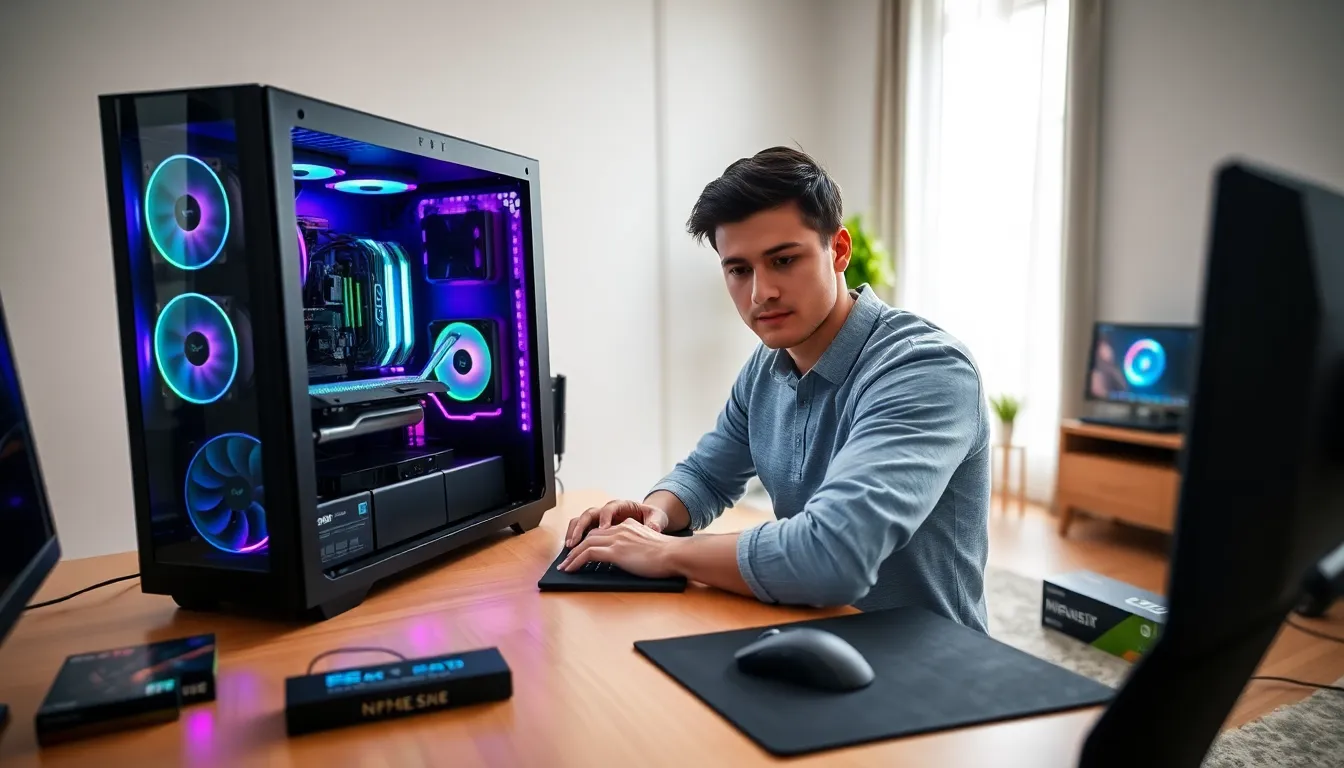
Every gaming PC relies on a few core components working together. The graphics card (GPU) handles visual rendering. The processor (CPU) manages game logic and system tasks. RAM provides temporary memory for active programs. Storage, either an SSD or HDD, holds game files and the operating system. The motherboard connects everything, while the power supply unit (PSU) delivers electricity to each part.
A PC gaming guide should stress balance. Pairing a top-tier GPU with a weak CPU creates bottlenecks. The CPU can’t feed data fast enough, so the graphics card sits idle. Similarly, 8GB of RAM might struggle with modern titles that recommend 16GB or more.
Choosing the Right Graphics Card and Processor
The graphics card matters most for gaming performance. NVIDIA’s RTX 4060 and AMD’s RX 7600 offer excellent 1080p performance at mid-range prices. For 1440p or 4K gaming, the RTX 4070 Ti or AMD RX 7800 XT deliver smooth frame rates in demanding titles.
Processor choice depends on budget and use case. AMD’s Ryzen 5 7600X provides strong gaming performance at a reasonable price. Intel’s Core i5-14600K competes closely and handles multitasking well. Gamers who stream or edit video might prefer a Ryzen 7 or Core i7 for extra cores.
RAM speed and latency also affect performance. DDR5 memory runs faster than DDR4 but costs more. Most gamers find 16GB of DDR5-6000 hits the sweet spot between price and performance. An NVMe SSD dramatically cuts load times, a 1TB drive provides enough space for several large games.
Building vs. Buying a Pre-Built Gaming PC
This PC gaming guide wouldn’t be complete without addressing a common question: should someone build their own system or buy a pre-built?
Building a PC offers several advantages. Builders choose every component, ensuring quality parts throughout. They avoid paying for bloatware or questionable brand choices on cheaper components. The process also teaches valuable skills, troubleshooting becomes easier when someone knows their system inside and out.
Pre-built systems have their own benefits. They arrive ready to play, often with warranties covering the entire machine. Some manufacturers offer financing options. For people who feel uncomfortable handling delicate electronics, pre-builts remove that stress entirely.
The price gap has narrowed in recent years. Pre-built gaming PCs from reputable brands like NZXT, Corsair, and Maingear use quality components and competitive pricing. Budget pre-builts from big-box retailers sometimes cut corners on PSUs and motherboards, so buyers should research specific models.
A middle-ground option exists: boutique builders. These companies let customers select components, then assemble and test everything. The buyer gets customization without the hands-on work.
Must-Have Peripherals and Accessories
A gaming PC needs input devices and a display to function. This section of the PC gaming guide covers the essentials.
Gaming Monitor: Refresh rate matters more than resolution for competitive players. A 1080p monitor at 144Hz feels smoother than a 4K display at 60Hz. IPS panels offer better colors and viewing angles than older TN panels. VA panels provide deep blacks but sometimes show motion blur.
Mechanical Keyboard: Mechanical switches last longer and feel more responsive than membrane keyboards. Cherry MX Red switches suit fast-paced games. Brown switches offer a tactile bump without loud clicks. Budget options from brands like Keychron and Akko deliver quality without premium prices.
Gaming Mouse: A good mouse needs a reliable sensor, comfortable shape, and enough buttons for the games someone plays. Lightweight mice around 60-70 grams have become popular for FPS games. MMO players often prefer mice with 12+ side buttons.
Headset or Speakers: A decent headset provides positional audio for competitive gaming and clear communication with teammates. Wireless options from SteelSeries and Logitech eliminate cable drag. Audiophiles might prefer separate headphones and a standalone microphone.
Mousepad: An often overlooked accessory. Large cloth pads provide consistent tracking across the entire surface. Hard pads offer less friction for faster movements.
Optimizing Your PC for the Best Gaming Performance
Hardware only tells part of the story. Software optimization helps every PC gaming guide reader squeeze maximum performance from their system.
Update Graphics Drivers: NVIDIA and AMD release driver updates for new games. These updates often improve performance by 5-15% in specific titles. Both companies offer software that notifies users about available updates.
Adjust In-Game Settings: Not every setting affects visual quality equally. Ray tracing and ambient occlusion demand significant GPU power. Texture quality and view distance matter more for immersion. Players should start with medium settings, then adjust individual options based on performance.
Enable Game Mode: Windows 11 includes a Game Mode that prioritizes gaming processes. It disables background updates and notifications during gameplay. Most users should enable this feature.
Manage Background Applications: Browsers with many tabs, streaming software, and monitoring tools consume RAM and CPU cycles. Closing unnecessary programs before gaming frees resources.
Monitor Temperatures: Overheating causes throttling, which reduces performance. Free tools like HWiNFO track CPU and GPU temperatures. If temperatures exceed 85°C regularly, improved case airflow or better cooling might help.
Consider Overclocking: Advanced users can overclock their CPU and GPU for extra performance. Modern hardware makes this process safer than before, but it still carries some risk. Beginners should research thoroughly before attempting any overclocking.