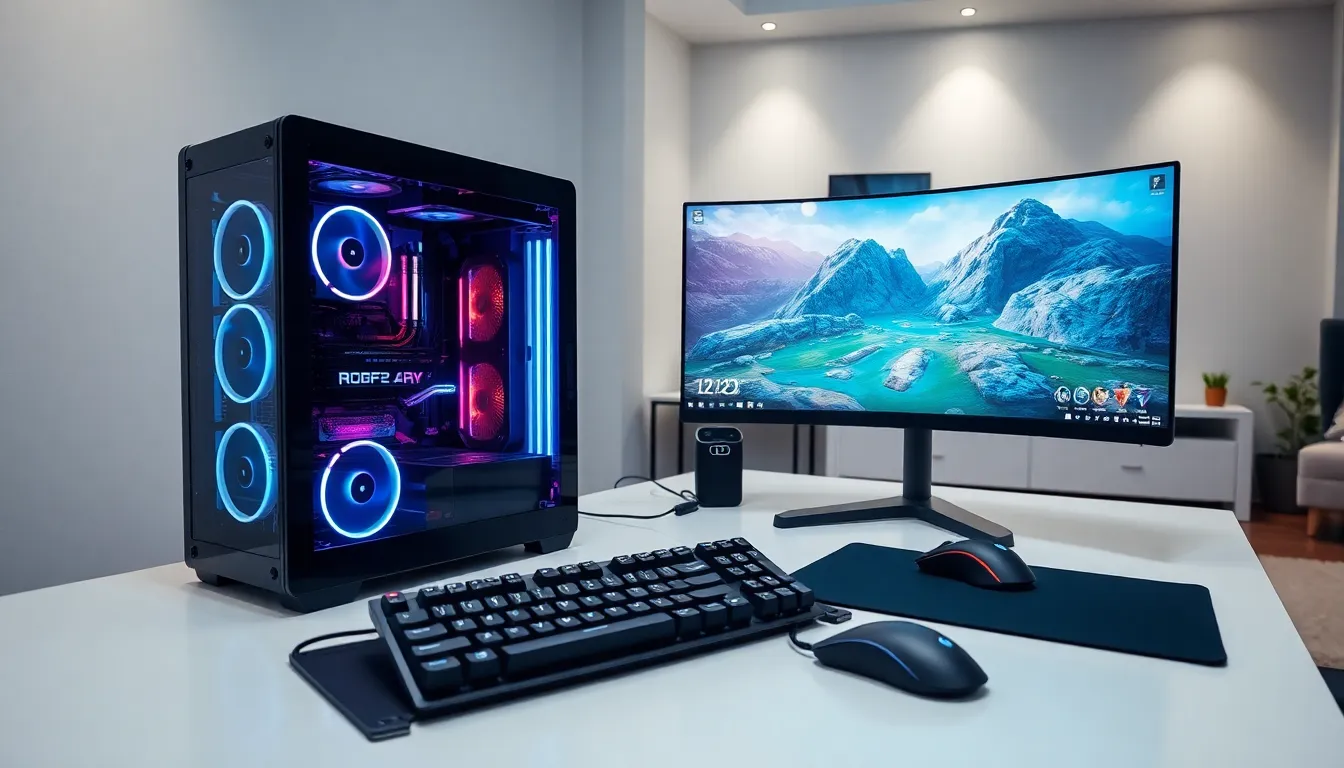
Best PC gaming offers an experience that consoles simply can’t match. The combination of superior graphics, customizable hardware, and a massive game library makes PC gaming the top choice for millions of players worldwide. Whether someone wants to play competitive shooters at 240 frames per second or explore open-world RPGs with ultra settings, PC gaming delivers.
This guide covers everything beginners need to know about best PC gaming setups. From essential hardware components to choosing between building and buying, readers will find practical advice to start their PC gaming journey. The goal is simple: help new players make smart decisions and avoid common mistakes.
Key Takeaways
- Best PC gaming delivers superior graphics, customizable hardware, and access to a massive game library that consoles can’t match.
- A quality GPU is the most important component for gaming performance—mid-range options like the RTX 4070 or RX 7800 XT offer excellent value.
- Building a PC saves 10-20% compared to prebuilts and teaches valuable troubleshooting skills, while prebuilts offer convenience and single-warranty coverage.
- For optimal visuals, pair your setup with a 144Hz monitor at 1440p resolution to balance performance and image quality.
- Use technologies like DLSS or FSR to boost frame rates, keep GPU drivers updated, and clean your PC every 3-6 months to maintain peak performance.
- Take advantage of Steam wishlists and multi-platform sales to save money, and explore mods to extend your favorite games’ lifespans.
Essential Hardware for PC Gaming
A best PC gaming setup starts with the right components. Each piece of hardware plays a specific role in delivering smooth gameplay and sharp visuals.
Graphics Card (GPU)
The GPU handles all visual processing. For best PC gaming performance, this component matters most. NVIDIA’s RTX 4070 and AMD’s RX 7800 XT represent excellent mid-range options in 2024. Budget-conscious gamers can still enjoy solid performance with cards like the RTX 4060 or RX 7600.
Processor (CPU)
The CPU runs game logic, physics calculations, and background processes. AMD’s Ryzen 7 7800X3D dominates gaming benchmarks, while Intel’s Core i5-14600K offers strong value. For best PC gaming results, aim for at least a 6-core processor.
RAM and Storage
16GB of DDR4 or DDR5 RAM meets current requirements for most games. But, 32GB provides headroom for future titles and multitasking. Storage should include an NVMe SSD, at minimum 1TB, for fast load times. Games like Starfield and Call of Duty can exceed 100GB each.
Monitor
A quality display showcases what the hardware can do. Best PC gaming monitors offer at least 144Hz refresh rates for smooth motion. 1440p resolution hits a sweet spot between visual quality and performance demands. IPS panels provide accurate colors, while VA panels deliver deeper blacks.
Peripherals
A mechanical keyboard and a gaming mouse with a reliable sensor complete the setup. Personal preference guides these choices, but responsive inputs make a real difference in competitive games.
Building vs. Buying a Gaming PC
New PC gamers face a fundamental question: build from scratch or buy prebuilt? Both paths lead to best PC gaming experiences, but they suit different people.
Building a PC
Building offers several advantages. Gamers choose every component, ensuring quality across the board. Custom builds typically cost 10-20% less than equivalent prebuilts. The process also teaches valuable skills, troubleshooting becomes easier when someone knows their system inside and out.
The downsides? Building takes time. First-timers might spend 3-4 hours on assembly. Compatibility research adds more hours upfront. And if something goes wrong, there’s no single warranty to fall back on.
Buying Prebuilt
Prebuilt systems shine in convenience. Companies like NZXT, Maingear, and even major retailers offer ready-to-play machines. These PCs arrive assembled, tested, and covered by a single warranty. For anyone intimidated by PC building, prebuilts remove that barrier entirely.
The trade-off involves cost and component quality. Some prebuilts use cheaper power supplies or slower RAM to hit price targets. Best PC gaming prebuilts from reputable builders avoid these shortcuts, though they charge accordingly.
The Verdict
Tech-curious individuals should consider building. The learning experience pays dividends for years. Those who want to game immediately, without research or assembly, will find happiness with a quality prebuilt. Either choice works. What matters is getting into the game.
Top PC Game Genres to Explore
PC gaming supports every genre imaginable. Some categories particularly shine on this platform, offering experiences that define best PC gaming.
First-Person Shooters (FPS)
PC dominates competitive shooters. Mouse and keyboard input provides precision that controllers can’t match. Counter-Strike 2 remains the gold standard for tactical gameplay. Valorant blends shooting mechanics with character abilities. For single-player experiences, the recent Doom games deliver intense action.
Strategy Games
This genre practically belongs to PC. Civilization VII lets players guide nations through history. Total War combines turn-based empire management with real-time battles. Smaller-scale tactics games like XCOM 2 test decision-making under pressure. Best PC gaming includes hours lost to “one more turn.”
RPGs and MMOs
PCs handle massive open worlds with ease. Baldur’s Gate 3 earned widespread acclaim in 2023 for its deep storytelling and player freedom. World of Warcraft continues drawing millions of subscribers. The Elder Scrolls V: Skyrim, over a decade old, remains popular thanks to mod support, something unique to PC gaming.
Simulation and Sandbox
From flight simulators to city builders, PC handles complex simulations that push hardware limits. Microsoft Flight Simulator recreates the entire Earth. Cities: Skylines lets urban planners build their dream metropolis. These games showcase what best PC gaming hardware can achieve.
Indie Games
Platforms like Steam give indie developers direct access to millions of players. Games like Hades, Hollow Knight, and Stardew Valley prove that smaller teams create memorable experiences. PC gaming’s open ecosystem supports these creators better than any other platform.
Optimizing Your PC Gaming Experience
Hardware alone doesn’t guarantee the best PC gaming experience. Software settings and smart habits make a significant difference.
Graphics Settings
Every game offers graphics options. Start with a preset (Medium or High), then adjust based on performance. Ray tracing looks impressive but demands serious GPU power. DLSS (NVIDIA) and FSR (AMD) use upscaling to boost frame rates with minimal visual loss. These technologies let mid-range systems punch above their weight.
Driver Updates
GPU drivers affect performance directly. Both NVIDIA and AMD release updates around major game launches. Keeping drivers current ensures best PC gaming performance and fixes bugs. Windows updates matter too, particularly for DirectX and security patches.
System Maintenance
Dust buildup causes overheating. Clean PC interiors every 3-6 months with compressed air. Monitor temperatures using free tools like HWiNFO. If components consistently run hot, consider adding case fans or upgrading the CPU cooler.
Game Launchers and Libraries
Steam dominates PC gaming distribution, but Epic Games Store, GOG, and EA App offer alternatives. Each platform runs sales throughout the year. Patient gamers save significant money by waiting for discounts. Steam’s wishlist feature sends alerts when tracked games drop in price.
Community and Mods
PC gaming communities share knowledge freely. Reddit, Discord servers, and game-specific forums help troubleshoot problems and discover new content. Mods extend game lifespans considerably, some titles like Skyrim have modding communities that remain active for over a decade. Best PC gaming often involves community-created content that refreshes familiar games.